CCA Oregon Weighs in on Sandy River Sanctuary
I wanted to take a few minutes of your time to let you know that we have contacted via letter the Oregon Fish and Wildlife Commissioners and Dr. Debbie Colbert, ODFW’s director, asking them to review and modify the current boundary of the Sandy River commercial gillnet sanctuary, which we believe is inadequate to protect salmon staging to return to the Sandy River.
In our letter we pointed out that gillnet sanctuaries exist to protect salmon that are staging at the mouths of tributaries. Salmon congregate at these areas for two primary reasons: waiting at the mouth until water conditions are conducive for them to migrate upstream or upriver bound fish that may dip into the area to find cold water refugia.
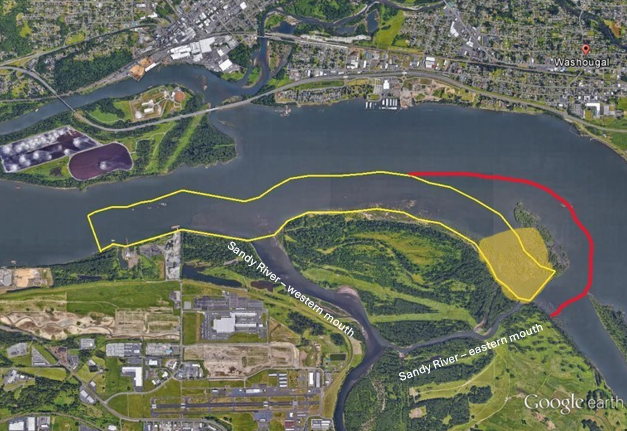
The Sandy River is somewhat unique in that it has two mouths, or areas where it flows into the Columbia River. The westerly mouth was historically the only migration corridor into the Sandy River. However, after a large salmon restoration project was completed a secondary mouth of the Sandy River was created upstream – creating a new easterly migration corridor for salmon to access the Sandy River.
Unfortunately, the current Sandy River sanctuary is insufficient to protect salmon staging at the easterly mouth of the Sandy River. During low flows, which are typical this time of year, a significant portion of the Sandy River flows into the Columbia at the easterly mouth. When flows are low, which is when gillnets are fishing this area, the easterly end of the sanctuary is dry or swampy land – it is not a salmon migration corridor. As such, the salmon migration corridor and staging areas are not protected by the current sanctuary.
We encourage the commission and the director to expand the eastern end of the sanctuary into the mainstem Columbia River and above the easterly mouth of the Sandy River. We feel this will help ensure that the sanctuary includes the salmon migration corridor during low flows. We included an image that roughly illustrates the current boundary (in yellow) and a suggested expanded boundary (in red) to provide protection for those fish staging at the easterly mouth of the Sandy River. The area highlighted in yellow is dry or swampy land that salmon do not migrate through during low flows.
Given the urgent nature of this matter, we asked that they consider an emergency rule to provide additional protection during this current fall fishing season. Time will tell if this comes to fruition, but please know we’ve
weighed in on this important issue.
Pat Hoglund
CCA Oregon Executive Director